
How to Choose the Right Air Conditioning in Dubai?
Dubai’s hot climate makes air conditioning not just a luxury but a necessity.
With summer temperatures soaring well above 40°C, selecting the right air conditioner for your villa or apartment is crucial. Whether you are a homeowner or tenant, choosing a trusted AC supplier directly impacts your daily comfort, monthly electricity bills, and property value. Explore the key factors to consider when selecting the right AC for villas and apartments across Dubai.
Understand the Climate of Dubai
Before diving into technical specifications, it is essential to understand Dubai’s local operating environment. With summer average temperatures reaching 40–45°C and coastal humidity levels often exceeding 60%, residential cooling systems face heavy, uninterrupted thermal demands. Homes across Dubai require robust systems built to deliver continuous high-ambient cooling performance without thermal tripping.
Did you know? Dubai holds a historical record for extreme summer temperatures, reaching 52.1°C (125.8°F) in 2002, highlighting the extreme thermal loads local cooling equipment must withstand.
Types of Air Conditioning Systems Available in Dubai
Selecting the right system architecture begins with understanding how different units serve specific property layouts:
1. Split AC Systems
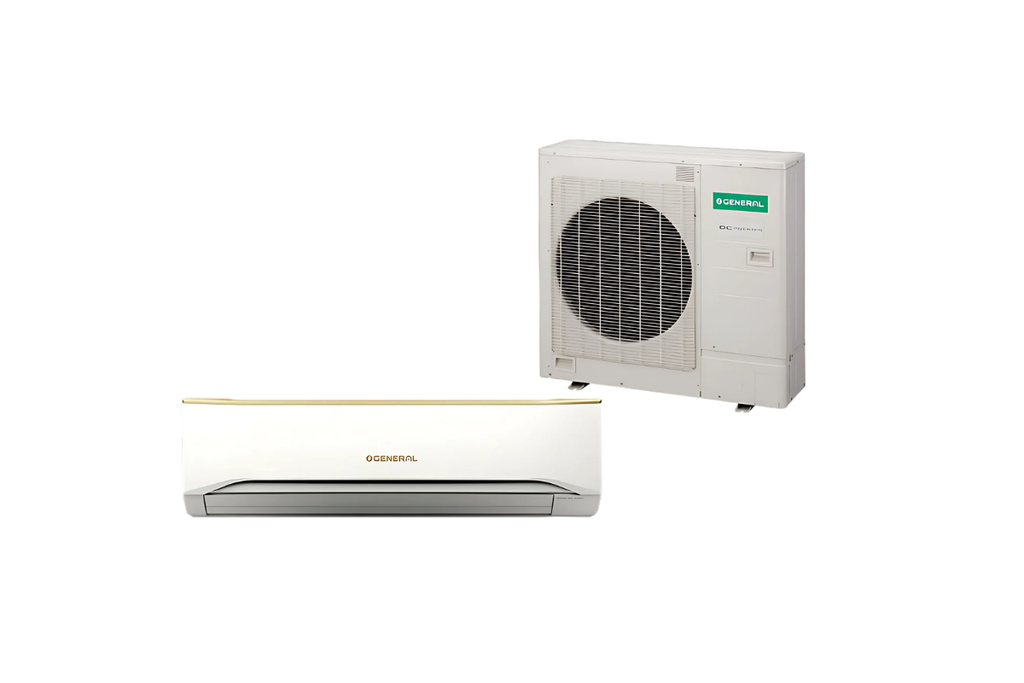
Ideal for cooling individual rooms or distinct living zones. A Split AC system consists of an indoor unit delivering conditioned air and an outdoor condensing unit rejecting heat. They offer high efficiency, cost-effective operation, flexible control, and straightforward wall installation.
2. Centralized & Ducted Systems
For larger villas, open majlis areas, and expansive apartments, Ducted AC systems provide uniform cooling through ceiling duct networks. While upfront installation costs are higher, central and concealed ducted systems offer seamless interior aesthetics, lower noise levels, and long-term efficiency.
Determining the Right Cooling Capacity (BTU / Tonnage)
Cooling capacity is measured in British Thermal Units (BTUs) or Tons of Refrigeration. An undersized AC will struggle to lower room temperature, while an oversized AC short-cycles, wasting energy and leaving rooms clammy.
- Apartments: 1.5 to 2 Tons (18,000–24,000 BTU) is generally sufficient for standard bedrooms and lounge areas.
- Villas: High ceilings and expansive living spaces often require 3 to 5 Tons per zone or ducted network.
- Rule of Thumb: Calculate approximately 60 BTUs per square meter, factoring in ceiling height, glass exposure, and occupancy.
Energy Efficiency & Regulatory Compliance
According to the Dubai Electricity and Water Authority (DEWA), air conditioning accounts for up to 70% of residential power usage during summer peak months. Choosing high Seasonal Energy Efficiency Ratio (SEER) or EER rated units dramatically reduces monthly utility expenses.
In the UAE, energy compliance is regulated by the Ministry of Industry and Advanced Technology (MoIAT, formerly ESMA). Look for official star-rating labels certified for high-ambient T3 operating conditions.
Smart Features, Layout Sizing & Air Quality
Smart Automation
Wi-Fi enabled units with programmable thermostats, real-time energy monitoring, and smart app integration (Google Assistant, Alexa) help schedule cooling and prevent energy waste.
Home Design & Layout
Factor in room ceiling heights, wall insulation quality, and west-facing window glazing. Large unshaded windows heat up rapidly, requiring higher cooling capacity reserve.
Filtration & Air Quality
Given airborne dust levels in the region, select AC units featuring multi-stage filtration, HEPA filters, or ionization technology to circulate clean, allergen-free air indoors.
Installation, Local Regulations & Total Value
Installation quality matters just as much as equipment brand. While split systems offer lower initial installation costs, centralized units provide superior long-term energy savings and quiet operation for larger homes. Always consult building management or developer guidelines regarding outdoor unit placements, architectural louvers, and noise compliance.
Balancing upfront equipment price with long-term energy savings ensures maximum return on investment. High-efficiency inverter models may carry a premium initial price, but they save thousands of Dirhams over their operating lifetime through lower DEWA consumption.
Make an Informed Decision with Optimus General
Choosing the right air conditioning system for your villa or apartment in Dubai requires matching cooling capacity, energy efficiency ratings, and expert installation. Contact Optimus General today for technical guidance, site surveys, and premium O General cooling solutions tailored to your property.